
NS Mainframe: The Strategic Engine for Modern Enterprise Infrastructure

Organizations around the world rely on NS Mainframe systems for their most important business operations. These platforms offer the performance, reliability, and scalability needed in today’s digital economy. As data environments become more complex, NS Mainframe technology has grown from a traditional setup into an advanced, integrated solution that supports millions of transactions while keeping systems stable and secure.
The Evolution of Enterprise Mainframe Systems
Market Transformation and Strategic Positioning
Enterprise computing has changed significantly in recent years. Organizations now deal with new data processing challenges that require strong, smart mainframe solutions. NS Mainframe meets these needs by providing powerful computing that grows with the organization.
The Data Processing Imperative
Today’s businesses handle large amounts of data every day, so they need systems that can manage heavy workloads without slowing down. Traditional distributed computing often cannot meet these demands, making mainframe systems vital for important operations. NS Mainframe offers a unified solution that reduces complexity and improves reliability.
Key Evolution Drivers:
- Exponential data growth across all business sectors
- Increasing regulatory compliance requirements
- Demand for 24/7 global operations
- Cybersecurity threat escalation
- Cloud integration necessities
Performance Metrics and Technical Superiority
Processing Speed and System Capabilities
NS Mainframe technology is built for speed, with an architecture made for handling large numbers of transactions. Its performance regularly beats traditional distributed systems, especially when many complex tasks need to be processed at once.
Performance Comparison Analysis:
| Performance Metric | Traditional Distributed Systems | NS Mainframe Platform | Advantage Ratio |
| Transaction Processing Speed | 1,200-1,500 TPS | 8,500-10,000 TPS | 6.8x |
| Batch Processing Efficiency | 75-85% | 96-99% | 1.3x |
| Concurrent User Support | Up to 5,000 | Up to 50,000 | 10x |
| Data Throughput Capacity | 2-3 GB/sec | 15-20 GB/sec | 7.5x |
| Response Time Consistency | Variable | <0.1 sec | N/A |
Legacy System Compatibility and Integration
One key feature of NS Mainframe technology is how easily it works with older systems. This lets organizations keep their current technology while updating their infrastructure over time, making digital transformation smoother.
Architectural Advantages
NS Mainframe systems use a modular design, so organizations can expand certain parts without replacing the whole system. With hybrid cloud connections, this setup gives businesses a flexible infrastructure that can adjust as their needs change.
Comprehensive Security and Reliability Framework
Multi-Layered Security Architecture
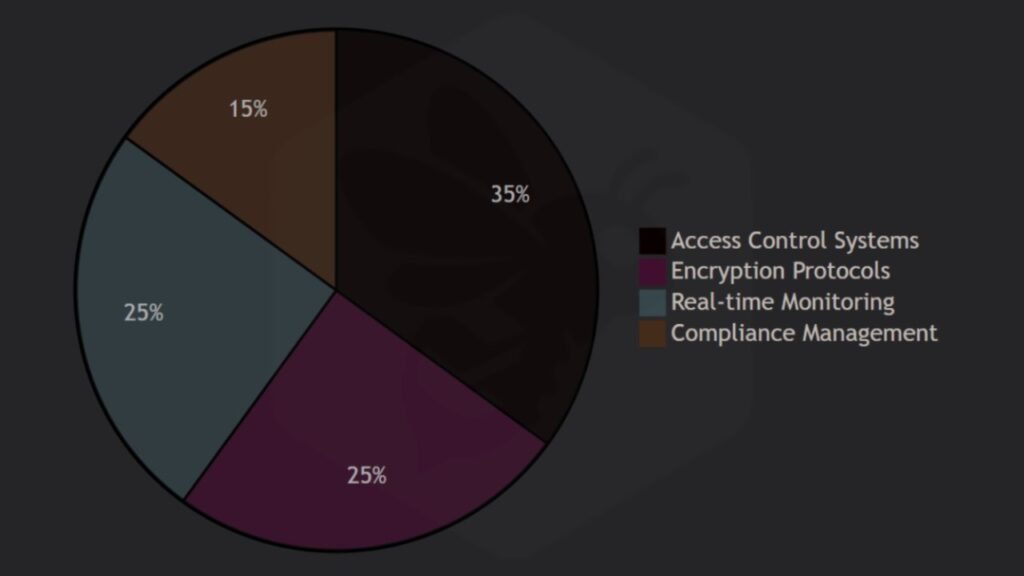
Security is a top priority for enterprise mainframe systems. NS Mainframe uses advanced protections to keep business data safe from both internal and external threats. Its layered encryption and strong access controls help protect important information and ensure proper data management.
Enterprise Security Implementation Distribution:
System Reliability and Business Continuity
NS Mainframe stands out for its reliability. The platform keeps running more than 99.999% of the time, even when demand is high, so businesses can count on it to stay available. Advanced data protection adds extra layers of safety against failures and security issues.
Critical Reliability Features:
- Automated failover systems with zero data loss
- Real-time health monitoring and predictive analytics
- Geographic redundancy options
- Hot-swappable components for maintenance without downtime
- Comprehensive disaster recovery orchestration
Strategic Cost Optimization and ROI
Total Cost of Ownership Analysis
Operating costs are a big factor in enterprise computing choices. NS Mainframe helps cut costs by using resources efficiently and combining infrastructure needs. Organizations can swap out many smaller servers for one mainframe, which lowers both hardware and ongoing expenses.
Enterprise Computing Cost Analysis:
| Cost Factor | Traditional Distributed Systems | NS Mainframe Solution | Percentage Savings | Annual Impact |
| Hardware Acquisition | $500,000 | $300,000 | 40% | $200,000 |
| Energy Consumption | $120,000/year | $70,000/year | 42% | $50,000 |
| System Maintenance | $80,000/year | $45,000/year | 44% | $35,000 |
| IT Management Overhead | $200,000/year | $110,000/year | 45% | $90,000 |
| Software Licensing | $150,000/year | $95,000/year | 37% | $55,000 |
| Total Annual Costs | $1,050,000 | $620,000 | 41% | $430,000 |
Optimization Mechanisms
- Hardware Reduction Strategy
- Consolidation of server sprawl
- Reduced physical footprint requirements
- Lower peripheral equipment needs
- Energy Efficiency Advancements
- Advanced power management systems
- Heat dissipation optimization
- Sustainable operations alignment
- Operational Expense Management
- Automated management systems
- Reduced personnel requirements
- Streamlined maintenance procedures
Integration and Management Ecosystem
Seamless System Integration
NS Mainframe solves integration challenges by connecting smoothly with existing software. It works well with both older applications and new cloud-based solutions, bringing together traditional and modern computing in one system.
Management and Monitoring Framework
NS Mainframe is easier to manage than many other systems. Its simple controls let administrators check performance easily, and smart alerts and dashboards give real-time updates on system health and performance.
Management Capability Matrix:
| Management Function | Traditional Approach | NS Mainframe Solution | Efficiency Gain |
| System Monitoring | Manual checks + multiple tools | Unified dashboard with AI insights | 65% time reduction |
| Performance Tuning | Reactive adjustment | Predictive optimization | 70% improvement |
| Security Management | Fragmented controls | Integrated policy enforcement | 80% faster response |
| Capacity Planning | Quarterly manual review | Continuous automated analysis | 90% accuracy improvement |
| Problem Resolution | Multi-vendor coordination | Single-system diagnostics | 75% faster resolution |
Scalability for Enterprise Growth
Adaptive Scaling Framework
As businesses grow, they need computing systems that can scale up. NS Mainframe offers strong scalability that keeps up with changing needs without losing performance. Organizations can grow with confidence, knowing their platform will handle more transactions and users.
Scalability Dimensions:
- Vertical Scaling: Adding processing power within existing infrastructure
- Horizontal Scaling: Expanding system capacity through modular additions
- Cloud Extension: Integrating with cloud resources for burst capacity
- Geographic Scaling: Distributed deployment across global locations
Modular Architecture Benefits
With its modular design, organizations can expand certain parts of the system as needed, making the best use of resources and timing investments. This way, computing power matches business growth, avoiding wasted capacity or shortages.
Future-Ready Technology Platform
Innovation Integration
NS Mainframe includes artificial intelligence and machine learning features to help organizations get ready for future technology. These tools allow for predictive maintenance, automatic optimization, and smart resource use, making the system better over time.
Investment Protection Strategy
Protecting long-term value is important when choosing enterprise technology. NS Mainframe helps by offering regular updates and new features, so systems stay current with industry standards and new technologies. This keeps technology useful longer and maintains a competitive edge.
Future Capability Roadmap:
- Quantum computing readiness
- Enhanced AI integration
- Advanced blockchain compatibility
- Extended edge computing connectivity
- Sustainable computing innovations
Competitive Advantage Analysis
Strategic Business Benefits
Staying competitive now depends on having the best technology and running operations efficiently. NS Mainframe offers both, with fast processing and easy management. Real-time data helps businesses make quick decisions, and reliable systems build customer trust and satisfaction.
Competitive Differentiation
Organizations implementing NS Mainframe solutions gain significant competitive advantages through:
- Improved operational efficiency metrics
- Reduced the total cost of ownership
- Enhanced security postures
- Superior customer experience delivery
- Accelerated innovation cycles
These advantages lead to better business results, a stronger position in the market, and more value for shareholders.
Conclusion: The Strategic Enterprise Foundation
NS Mainframe is a strong foundation for enterprise computing. It combines top security, high scalability, and cost savings of over 40%. The platform connects older systems with modern cloud needs, making infrastructure a lasting advantage. It keeps businesses running and ready to grow, providing a reliable engine for all critical operations in today’s digital world.
Frequently Asked Questions (FAQs)
What makes the NS Mainframe different from traditional servers?
The NS Mainframe is engineered as a single, consolidated system designed for maximum reliability and security, whereas traditional servers are typically distributed and less coordinated. It handles vastly higher transaction volumes with superior stability and offers far greater processing power, energy efficiency, and centralized management in one robust platform.
How does the NS Mainframe achieve significant cost savings?
It achieves savings primarily through consolidation, reducing the need for hundreds of individual servers. This leads to direct reductions in hardware, energy consumption, software licensing, and IT management overhead. Automated systems further lower operational expenses, typically delivering over 40% savings in total cost of ownership compared to distributed systems.
Is the NS Mainframe compatible with modern cloud and AI technologies?
Yes, absolutely. The NS Mainframe features native hybrid cloud connectivity, allowing it to function as a secure core integrated with cloud services. It also incorporates AI and machine learning capabilities for predictive analytics, automated optimization, and intelligent resource management, making it a future-ready platform.
Why is security stronger on a mainframe compared to other systems?
Security is built into the NS Mainframe’s architecture at every level, not added on. It employs multi-layered encryption, granular access controls, and real-time monitoring by default. Its consolidated nature also means a smaller attack surface compared to managing security across countless individual servers.
Can the NS Mainframe scale with my business as it grows?
Yes, its modular architecture is designed for seamless scaling. You can add processing power, memory, or storage capacity incrementally without major overhauls. It supports both vertical scaling (enhancing the core system) and horizontal scaling (integrating with cloud resources), ensuring it meets evolving demands.